Paris
Breccia Fawakhir, Alabaster, Stainless Steel
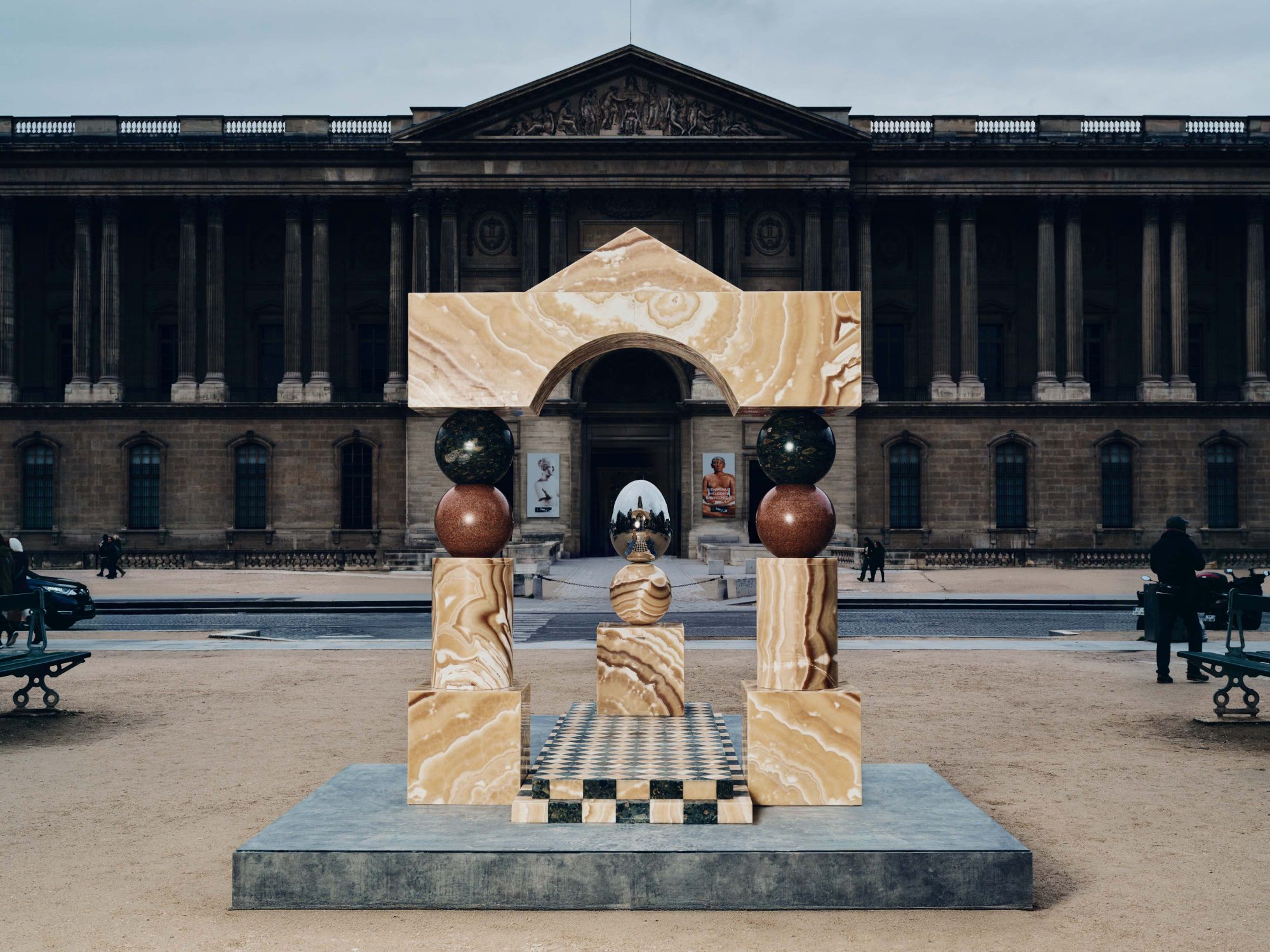
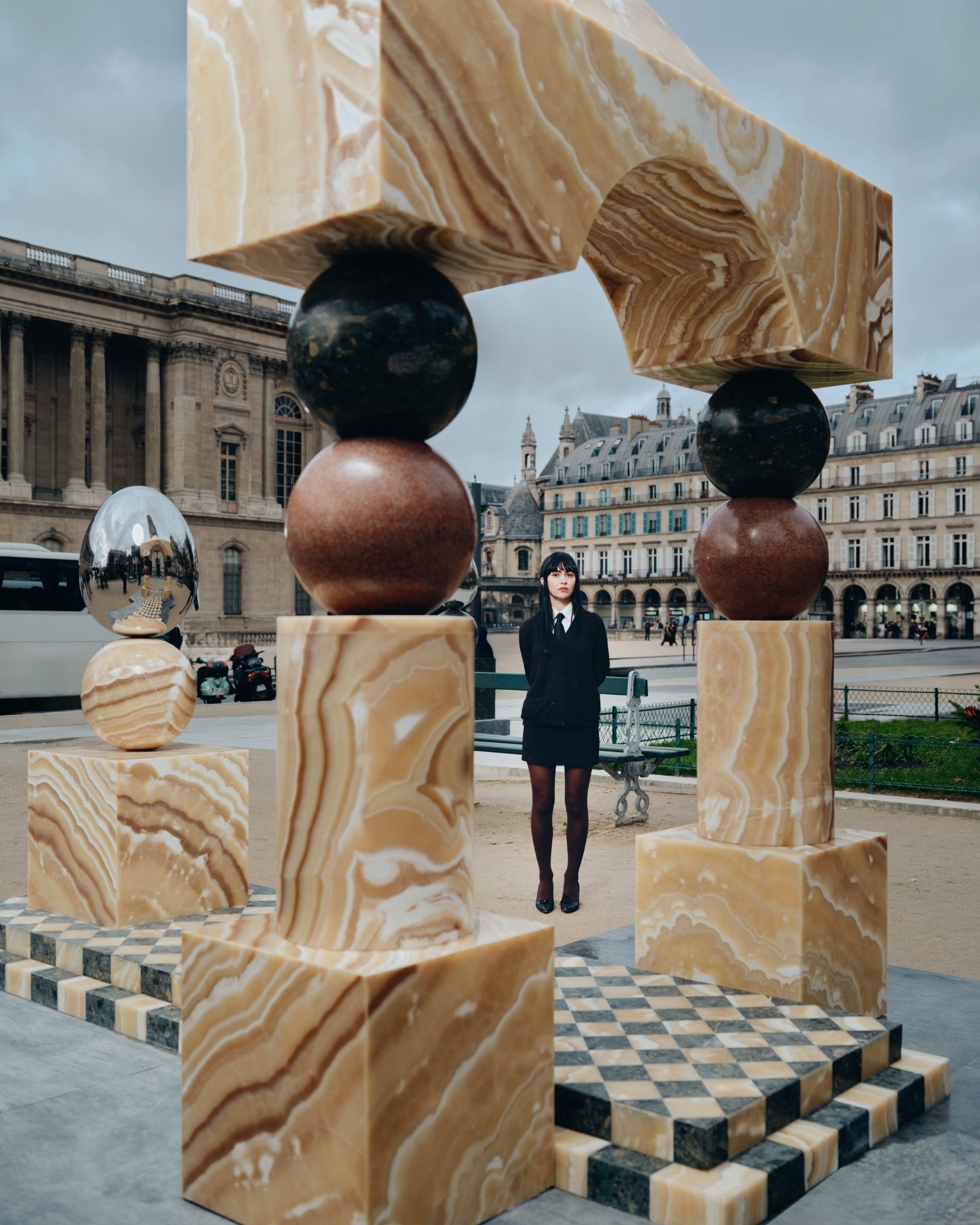
Mirror Gate II is presented at Place du Louvre, Paris, under the patronage of the Ministry of Culture of the Arab Republic of Egypt, with the support of the Mairie de Paris Centre.
Positioned at the entrance of the Louvre’s Egyptian collections and aligned with the glass pyramid designed by I. M. Pei, the work establishes a precise spatial relationship between ancient architectural material and a contemporary civic site.
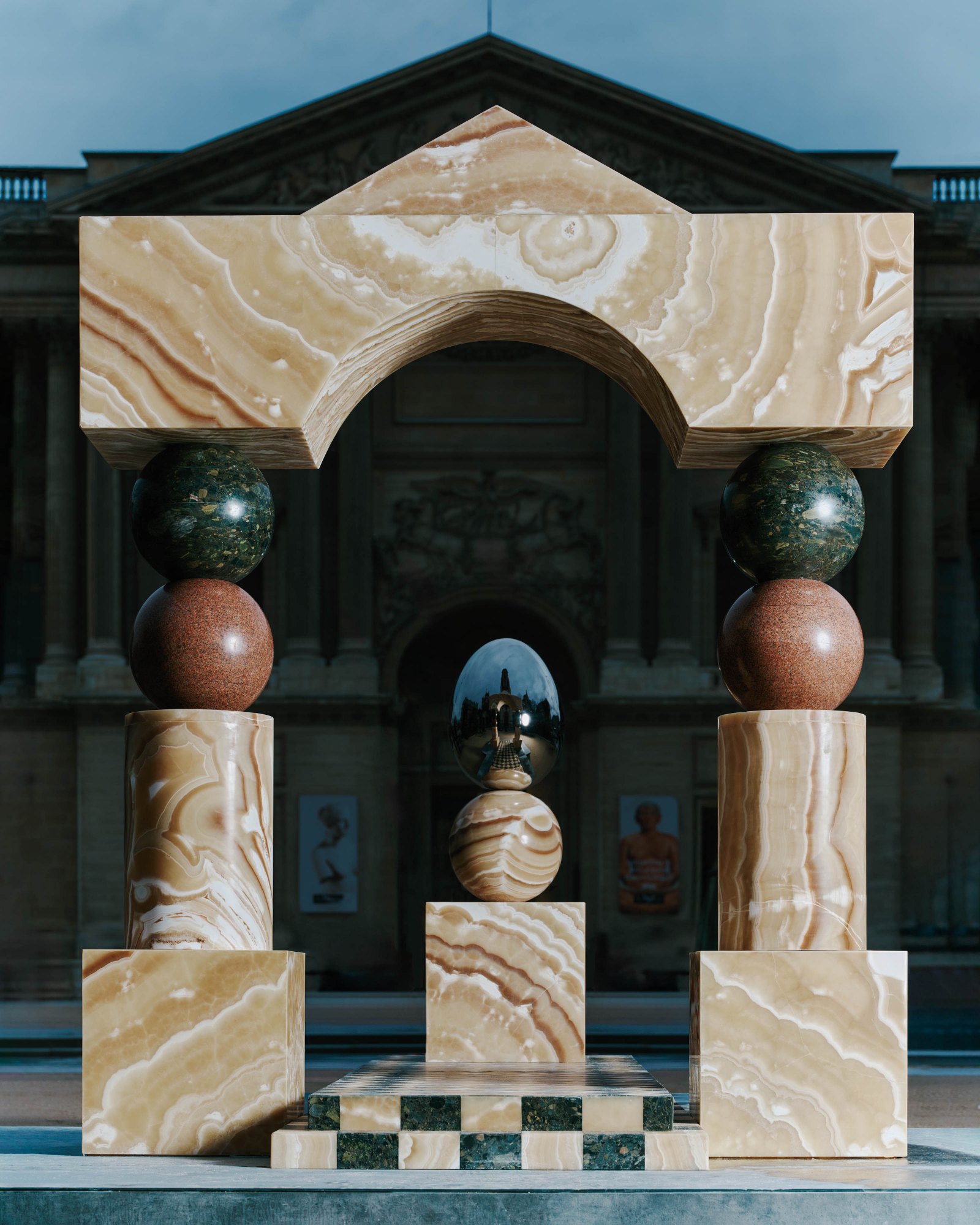
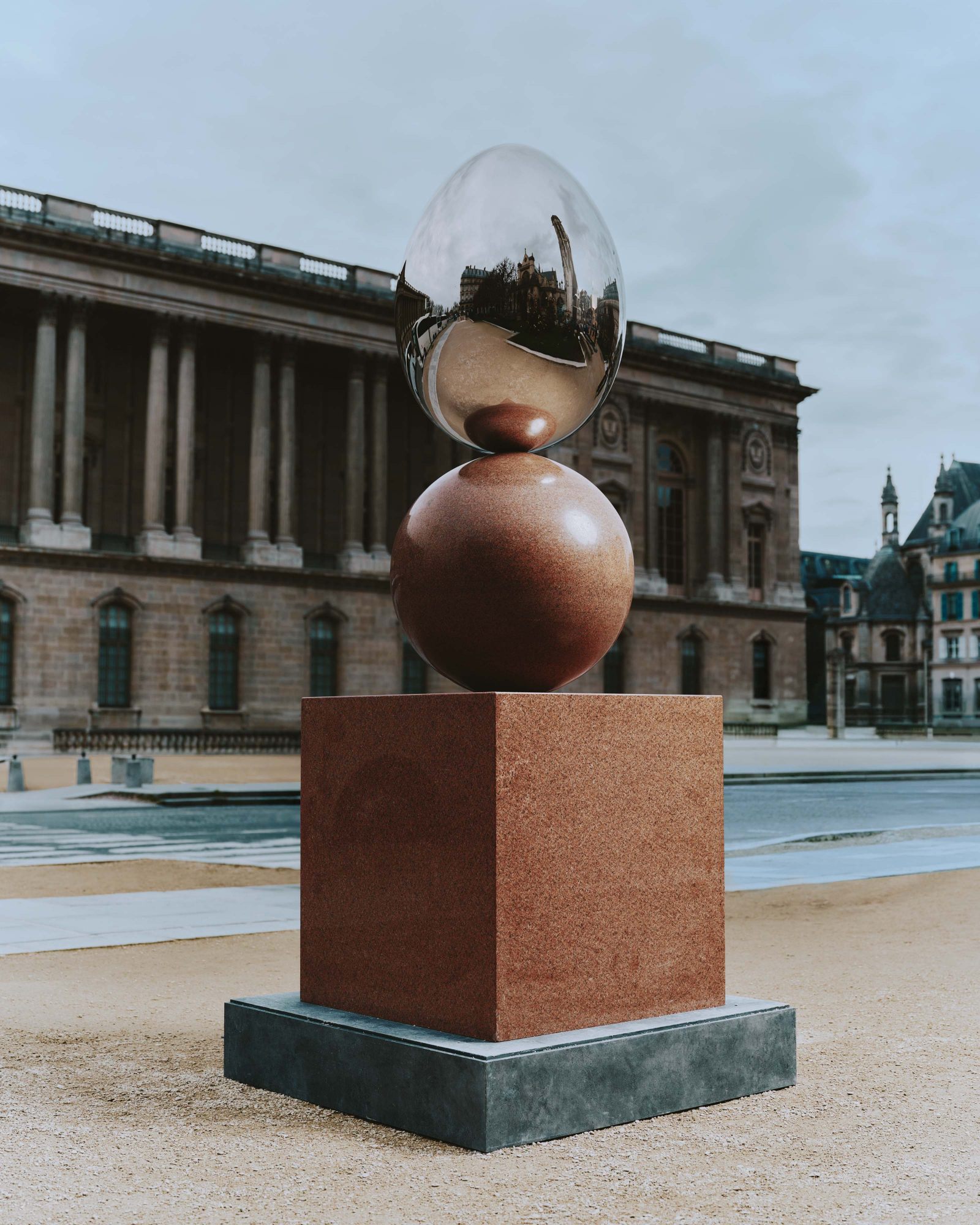
Conceived as an evolution of a body of work first presented at the Pyramids of Giza, Mirror Gate II continues Pilar Zeta’s exploration of portals and thresholds as architectural forms of passage. The sculpture is constructed from Egyptian heritage stones, including yellow alabaster, red Aswan granite, and Breccia Fawakher, materials historically used in temples, monuments, and sacred architecture.
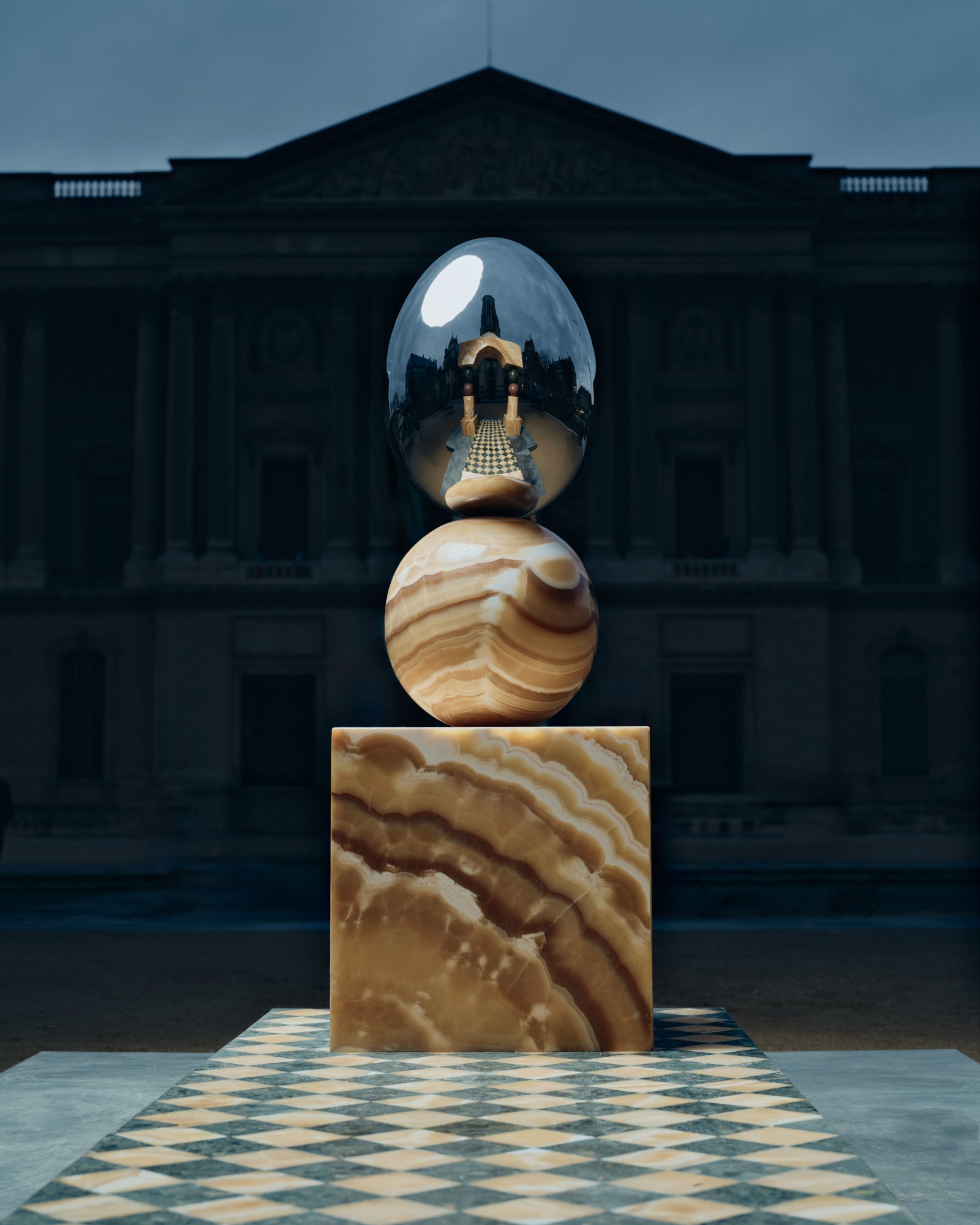
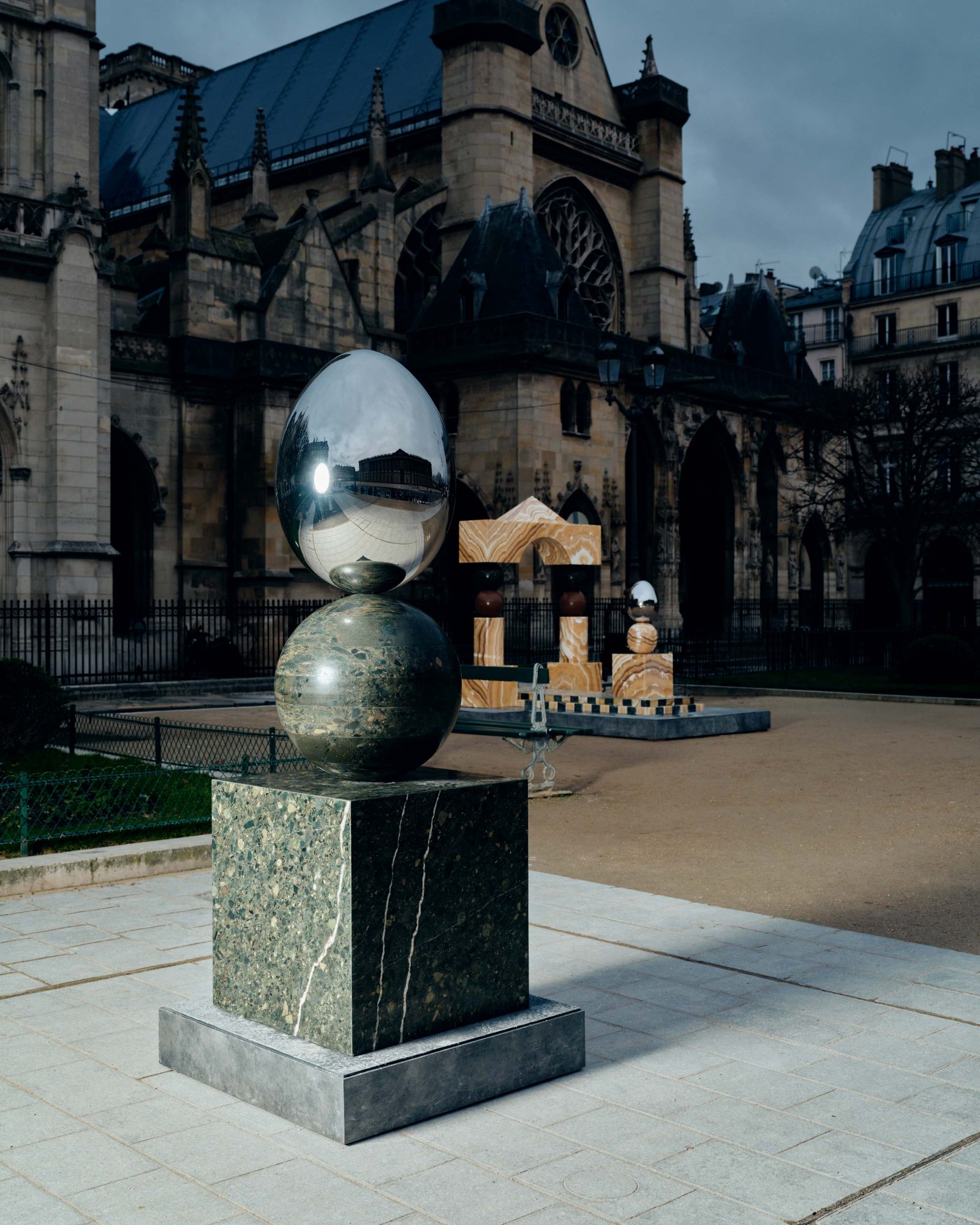
Each stone was selected for its material and historical significance. Yellow alabaster relates to light and interior space, red Aswan granite to permanence and structural strength, and Breccia Fawakher, a stratified stone from Egypt’s Eastern Desert, to geological time and transformation.
Two sculptural eggs accompany the portal. Longstanding motifs in Zeta’s practice, the eggs function as forms of origin and potential, positioned in dialogue with the portal and the surrounding architecture. Placed beside the entrance to the Egyptian collections, they extend the work’s language of threshold, transition, and emergence.
Curated by Stéphane Ruffier-Meray, the work does not replicate historical forms but recontextualizes ancestral materials within the contemporary urban fabric of Paris. Through this repositioning, Mirror Gate II proposes architecture as a spatial experience shaped by material, scale, and alignment across time and place.